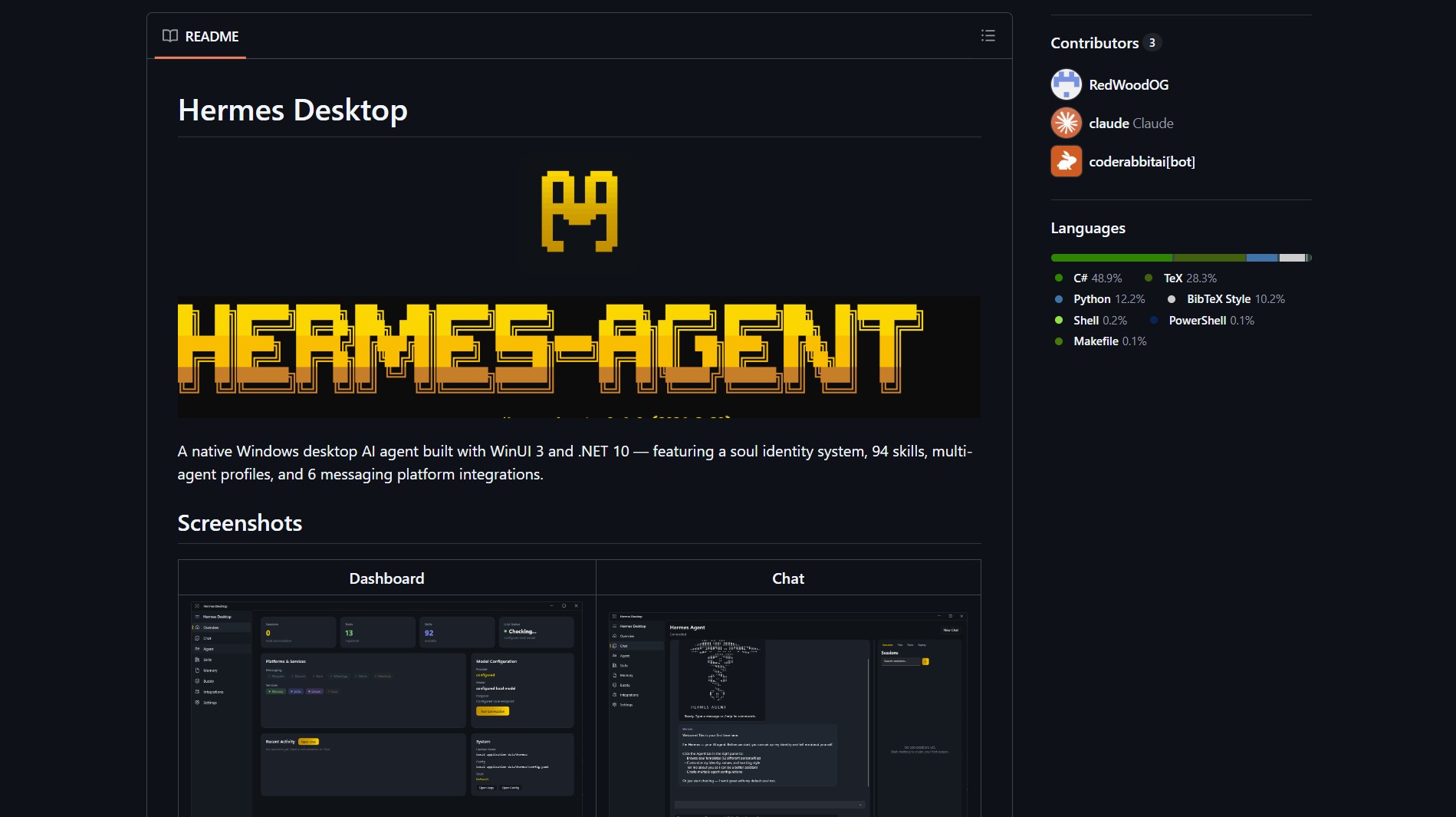
Hermes Agent Desktop by RedWoodOG wraps the NousResearch Hermes Agent in a WinUI 3, .NET 10 desktop app. It gives you a fast, native Windows interface with multi-agent profiles, skill management, and messaging platform integrations. The project is still in active development but the repo is now functional beyond a shell.
The native Windows app includes a soul identity system, 94 skills, eight provider hooks, and six messaging integrations — all without Electron or web views. If you have been running the CLI version of Hermes Agent as a persistent terminal assistant, this desktop client gives you the same agent system with a proper Windows UI.
Key Features
| Feature | Notes |
|---|---|
| Native stack | WinUI 3, .NET 10, Windows App SDK for a responsive native UI |
| Agent system | Multi-agent profiles, soul identity system, skill management |
| Integrations | 6 messaging platform integrations and 8 provider hooks |
| Extensible | Designed for developers to add skills and providers |
Quick start:
git clone https://github.com/RedWoodOG/Hermes-Desktop.git
cd Hermes-Desktop
# follow the README for build steps, requires .NET 10 and WinUI 3
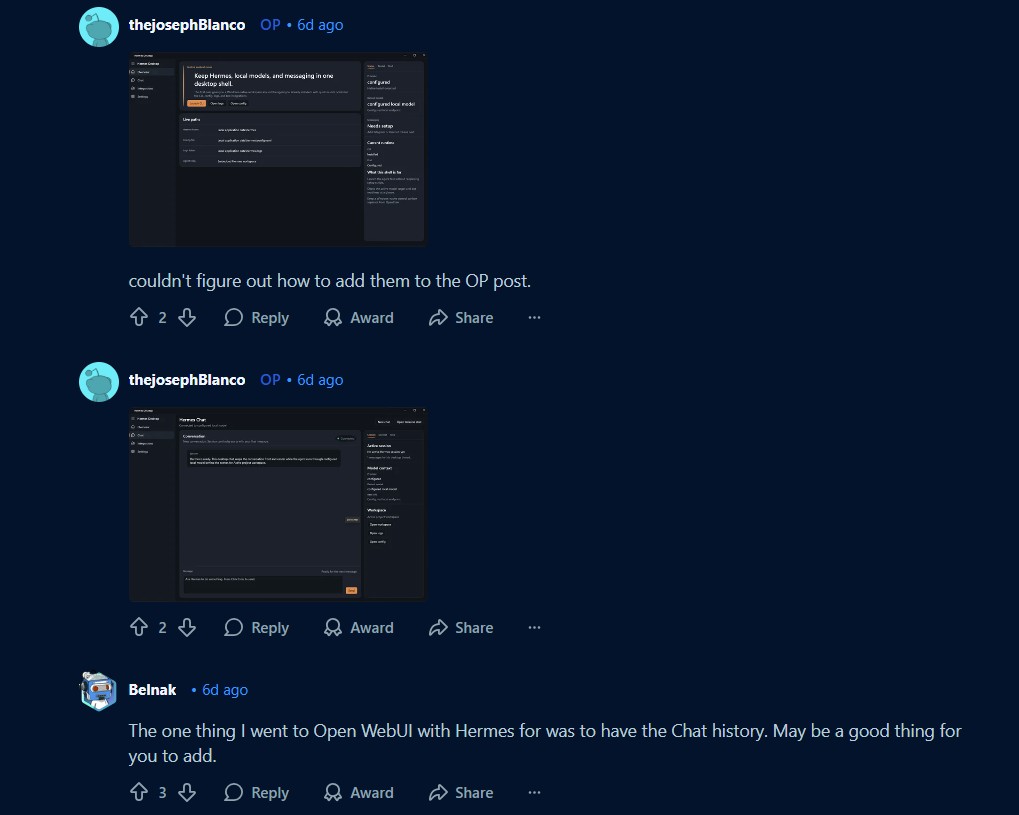
If you value chat history and continuity, check how history is stored and whether the desktop client syncs logs with your existing Hermes backend. The agent memory system is similar to how Acontext provides open skill memory for AI agents across different client interfaces.
Pros
- Native performance and integration with Windows features
- No Electron — smaller runtime surface and more predictable UX
- Rich agent model with many skills ready to test
Cons
- Requires Windows and recent .NET runtime, not cross-platform
- Active development — expect breaking changes or incomplete features
- Desktop access increases the importance of local security and credential management
Try It Locally
- Clone the repo and follow the README to build with Visual Studio or dotnet CLI.
- Run the app on Windows 10/11 with .NET 10 installed, then configure providers and integrations.
Agentic desktop apps can access local resources, so audit providers, secure credentials, and consider running behind least privilege accounts or VM sandboxes.
Project link:
https://github.com/RedWoodOG/Hermes-Desktop
https://www.technolati.com/how-to-run-hermes-agent-desktop-as-a-native-windows-ai-agent/?fsp_sid=733